

Professional Scuba Dive Instructor or Guide
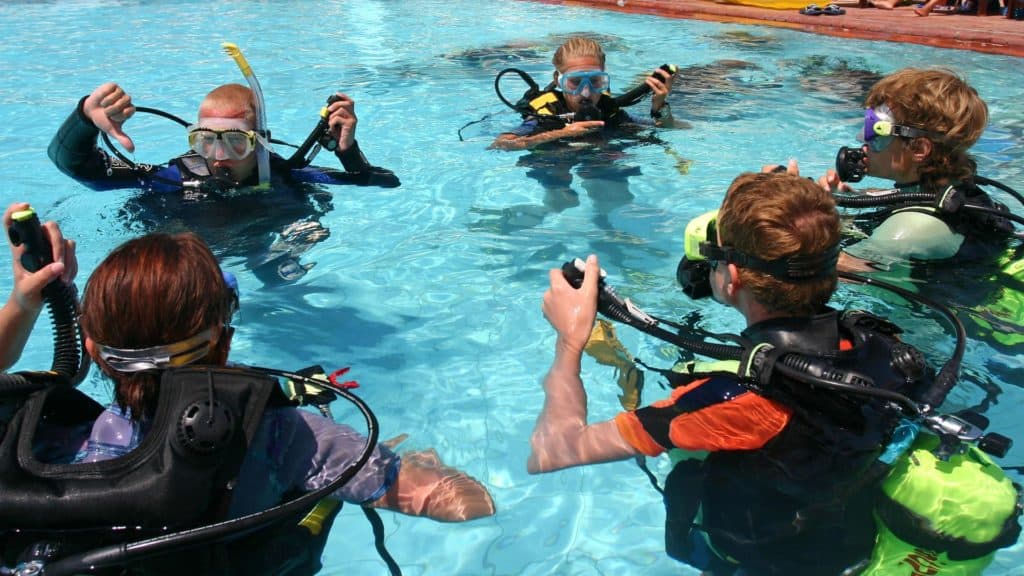
Leading the way to a world of underwater discovery
Become a Certified Dive Guide
The Dive Guide program is the first step on an exciting journey. Learn to safely lead certified divers in various environments and conditions. By giving dive briefings, doing site evaluations, and leading dives, you will become a confident Dive Guide in no time. Begin your diving career working as a Professional Dive Guide or continue the qualifications for Divemaster.
- Diver Level: Diver Stress and Rescue.
- Suitable for: more than 15 years old
- Previous Experience and required courses: Deep – Navigation – Night and Limited Visibility +40 Dives
- Course Length: 7 days (including theory + dives)
Are you ready to embark on an exciting journey in the diving world? The Dive Guide program is here to help you get started. In this program, you will learn how to safely lead certified divers in a range of environments and conditions. Through dive briefings, site evaluations, and leading dives, you will become a confident Dive Guide. With the skills you gain, you can either start working as a Professional Dive Guide or continue your education to become a Divemaster. So why wait? Start your diving career today with the Dive Guide program.
Here in Halkidiki, that confidence matters because conditions can change fast. One day you have glassy seas and clear water over shallow reefs, the next you have a light northerly breeze and a bit of surface chop. As a local skipper who spends seasons on the water and around the dive boats, I see how good guides keep divers calm, organised, and enjoying the dive. You will learn how to read the site, plan the route, and keep the group together without rushing anyone. It is not about being the loudest in the water, its about being the steadiest.
A big part of guiding in Northern Greece is knowing how to work with the coastline and the mood of the sea. Around the Sithonia peninsula you often get sheltered bays when the wind is up, and in summer the visibility can be very good, especially after a few calm days. You will practise choosing entry and exit points, checking boat traffic, and adapting the plan for different experience levels. That real-world thinking is what turns a good diver into a good professional.
The Professional Dive Guide – Dive Master program is a professional-level certification that allows you to become an expert in leading both recreational and technical diving operations. Through rigorous training, you will learn how to efficiently and safely lead certified divers in an array of environments and conditions, give dive briefings, evaluate dive sites and set up gear. You will be able to embark on the next step of your dive journey by beginning your diving career as a Professional Dive Guide or continuing on the road towards becoming an Dive Master. With this certification, you will be able to work around the world whether it be guiding dives near a calm beachside reef or guiding deep-sea exploration dives.
Training at this level is also about professionalism on the surface. You will get used to preparing kit for others, spotting small issues before they become big problems, and keeping the pace of a dive day smooth. Divers remember the guide who explains the plan clearly, checks everyone is comfortable, and still leaves space for discovery. In busy summer weeks, that calm structure is what makes the difference between a good day and a messy one.
If you are thinking long term, this pathway fits naturally with the reality of seasonal work in Halkidiki. The area comes alive from late spring through early autumn, with warm water, long days, and plenty of boat movement. As a guide, you can build experience quickly by working with different groups, from holiday divers to locals polishing skills. Then, when you are ready, you can step into Divemaster responsibilities with a stronger foundation and better people skills, which is honestly what most new pros need.
For general travel and safety planning in Greece, it helps to stay informed through official sources and simple sea updates. You can check destination background on Wikipedia’s Halkidiki overview, follow public advice from the Hellenic Ministry of Foreign Affairs, and keep an eye on local conditions with meteo.gr. Those small habits support better decisions for divers and crew, even on easy days.
If you want to pair your professional training with time on the water, Porto Scuba also runs sailboat days that suit divers and non-divers alike. It is a nice way to build sea sense, relax between training days, and keep your confidence around boats and anchoring. You can explore options and availability directly at portoscuba.com.
Features:
This is where the training becomes practical and repeatable, so you can deliver the same safe standard every time, even when the group is mixed or the site is new.
- Learn safety protocols for all types of diving operations
- Gain experience leading certified divers in various environments
- Improve dive briefing skills
- Advanced navigation techniques
- Experience setting up technical gear
Benefits:
Beyond the certification card, the real benefit is feeling capable on a busy deck, in the water, and in front of a group. You will learn to anticipate problems, communicate clearly, and keep the dive enjoyable without cutting corners.
- Properly trained professionals gain the confidence boost they need to stay safe underwater and lead divers on amazing dives.
- With this certification, divers who have proven their knowledge and skill can qualify for employment in different countries as well as work in a more specialized location such as technical Scuba Diving Centers.
- This certification also provides access to top industry equipment at discounted rates so new dive masters can purchase high-end gear without breaking the bank!
When you are guiding in places like Sithonia, you will also appreciate how these benefits translate into daily work. Better navigation means less time searching and more time enjoying the reef. Better briefings mean fewer anxious divers and fewer surprises. Better equipment knowledge means you can help a guest quickly, even if their setup is unfamiliar. It all adds up, and you will feel it from the first week.
Many candidates also like that the program builds leadership without forcing a single style. Some guides are calm and quiet, others are energetic, but the best ones are consistent. You will practise timing, group control, and how to handle little issues like mild seasickness or a diver who drifts off the route. Those moments happen, and learning to manage them early makes you a stronger pro, even if you feel a bit nervos at first.
send us an email at tours@portoscuba.com
call us: +306980700070
send a message via WhatsApp
send an SMS
call us on Skype
call or text us on Viber
send a message via Messenger
Don't forget to mention:
- Number of persons, possible dates
- The hotel you'll be staying
- The activity you are interested in
Professional Assistant Instructor
Inspiring growth and confidence through safe, comprehensive, and personalized instruction
What Is a Professional Assistant Instructor?
Moving from guiding to assisting instruction is a natural step if you enjoy helping people progress, not just showing them a site. In Halkidiki, you often meet divers who are on holiday and want to improve quickly, and you will learn how to support that growth in a structured way. The Assistant Instructor path gives you teaching experience while keeping you inside a supervised framework, which is ideal for building confidence.
As a skipper, I see how instructors set the tone for the whole day. A good assistant helps the team stay organised, keeps students focused, and makes the atmosphere relaxed. You will learn how to deliver briefings that are clear and encouraging, and how to keep training safe when conditions change. Some days are flat calm, other days the wind picks up and you need to adapt the plan without stressing the students, its a skill you can train.
It also helps that you will be working with real people, not just checklists. You will meet students who learn fast and others who need more time. You will practise recognising stress early, correcting small mistakes gently, and celebrating progress without pressure. That human side is what turns technical knowledge into real instruction.
Before you step into the rating, make sure your experience base feels solid. If you have 60 dives but they are all in one easy bay, consider adding variety. Different entries, different visibility, different temperatures, and different buddy teams. That variety makes your teaching more flexible and more realistic.
If you are looking to advance your career in scuba diving, the SSI Assistant Instructor rating is a great next step after becoming a Divemaster. This rating allows you to gain valuable experience in teaching, including giving lectures and briefings, as well as conducting in-water training. Upon completing the Assistant Instructor rating, you may choose to take the Instructor Evaluation to become a fully certified Open Water Diving Instructor.
As an SSI Professional Scuba Instructor (PSAI), you’ll be a part of the world’s leading scuba training organization. You’ll have the opportunity to draw on your experience and mentor upcoming divers, use your passion for sharing knowledge and create an impact on those people entering the amazing world of diving.
Features:
These features are designed to sharpen your personal diving and your ability to explain it. You will practise demonstrations, problem solving, and how to manage a class flow from start to finish.
Benefits:
The biggest benefit is confidence in front of a group. You will know what to say, when to step in, and when to let a student learn through doing. That balance is what makes instruction feel calm and professional.
send us an email at tours@portoscuba.com
call us: +306980700070
send a message via WhatsApp
send an SMS
call us on Skype
call or text us on Viber
send a message via Messenger
Don't forget to mention:
- Number of persons, possible dates
- The hotel you'll be staying
- The activity you are interested in
Professional Open Water Scuba Instructor
Explore. Educate. Empower. Dive into adventure
How to Become a Scuba Instructor
Becoming an Open Water Scuba Instructor is where teaching becomes your main role. You are not only guiding certified divers, you are creating new divers and shaping their habits from day one. In summer in Halkidiki, you might teach in sheltered water in the morning, then see your students on a boat later in the week, excited and confident. That is a special feeling, and it is why many pros choose this direction.
It is also a practical career step if you want flexibility. Instructors can work with dive centres, seasonal operations, and training-focused teams. You can build a routine that includes teaching, guiding, and supporting trips. If you also enjoy time at sea, combining instruction with local boat days keeps your sea legs strong and your awareness sharp, wich helps in real teaching scenarios.
To begin your journey as an SSI Instructor, you must first meet the requirements of a Divemaster or equivalent. The 3-Step Instructor Training Approach includes an Assistant Instructor/Instructor Training Course combination, which includes Digital Learning, followed by the Instructor Training Course (ITC). Upon successful completion of the ITC, you will enrol in an Instructor Evaluation (IE) to become an SSI Open Water Instructor. This 10-day program enables you to independently teach various key SSI programs such as Scuba Diver, Open Water Diver, Enriched Air Nitrox, Diver Stress and Rescue, and Dive Guide. If you prefer to take more time to learn and gain valuable teaching experience between the training programs, the three steps of the approach can also be completely separately at your own pace and with a flexible schedule: Assistant Instructor, Instructor Training Course(ITC), and Instructor Evaluation(IE).
Instructor Requirements
This program is for anyone who wants to become an SSI Open Water Scuba Instructor. Whether you are already working in the dive industry and want to improve your credentials or you are an experienced diver looking to make the transition into teaching, the SSI Instructor Training Program is based on a progressive, three-step approach which will allow you to learn at your own pace and gain valuable dive industry experience before moving on to the next step of your SSI instructor career.
In daily life, those requirements protect your students and protect you. You are expected to model good habits and calm decision making. That means solid buoyancy, clear communication, and the ability to keep track of multiple people without losing the plot. It also means being ready for the small surprises that happen in real training, like a mask issue at the surface or a student who needs an extra minute to equalise.
In Greece, the teaching environment is often very welcoming. Many students are on holiday, so they arrive excited, but they can also be tired from travel or heat. Good instructors know how to pace the day, keep hydration and sun protection in mind, and create a safe learning space. Those details are not glamorous, but they are what students remember when they tell friends they had a great course.
3-Step Instructor Training Approach
The 3-Step Instructor Training Approach includes an Assistant Instructor/Instructor Training Course combination, which includes Digital Learning, followed by the Instructor Training Course (ITC). Upon successful completion of the ITC, you will enrol in an Instructor Evaluation (IE) to become an SSI Open Water Scuba Instructor. This 10-day program enables you to independently teach various key SSI programs such as Scuba Diver, Open Water Diver, Enriched Air Nitrox, Diver Stress and Rescue, and Dive Guide. If you prefer to take more time to learn and gain valuable teaching experience between the training programs, the three steps of the approach can also be completely separately at your own pace and with a flexible schedule
That flexibility is useful if you are balancing work, travel, or time on the water. Some candidates prefer to complete digital learning first, then spend a few weeks guiding to build comfort before stepping into the ITC. Others want to keep momentum and complete the full pathway in one go. Both approaches can work, as long as you stay consistent with practice and keep your skills sharp.
While you train, pay attention to how you speak. Simple, clear language wins. Students do not need big speeches, they need short steps and calm correction. You will also learn to keep your eyes moving, scanning the group, checking air, checking comfort, and checking the environment. It becomes second nature, but at the start it can feel like a lot, so give yourself time to settle in.
If you are ready to turn training into action, you can also look at local experiences that keep you connected to the sea between courses. Porto Scuba’s private or per-person sailboat day trips are a relaxed way to explore the coastline, swim in quiet bays, and keep your water confidence high. It is also a nice option for friends or family who travel with you and want a sea day while you train.
Features:
These are the tools that help you teach professionally, not just pass an evaluation. The aim is to make you independent, consistent, and safe with real students.
Benefits:
The benefits are both personal and professional. You gain a career you can take around the world, and you also gain the satisfaction of helping people enter the underwater world in the right way.
send us an email at tours@portoscuba.com
call us: +306980700070
send a message via WhatsApp
send an SMS
call us on Skype
call or text us on Viber
send a message via Messenger
Don't forget to mention:
- Number of persons, possible dates
- The hotel you'll be staying
- The activity you are interested in
 Previous Post
 Next Post